
Kemi, a 29-year-old project manager in Lagos, was halfway through her coffee break when an Instagram video showcasing a stylish handbag caught her attention. She tapped “Add to Cart” almost without thinking, but hesitated when the app requested her location and payment details.
Headlines about digital fraud and data breaches flashed through her mind, and she quickly closed the app.
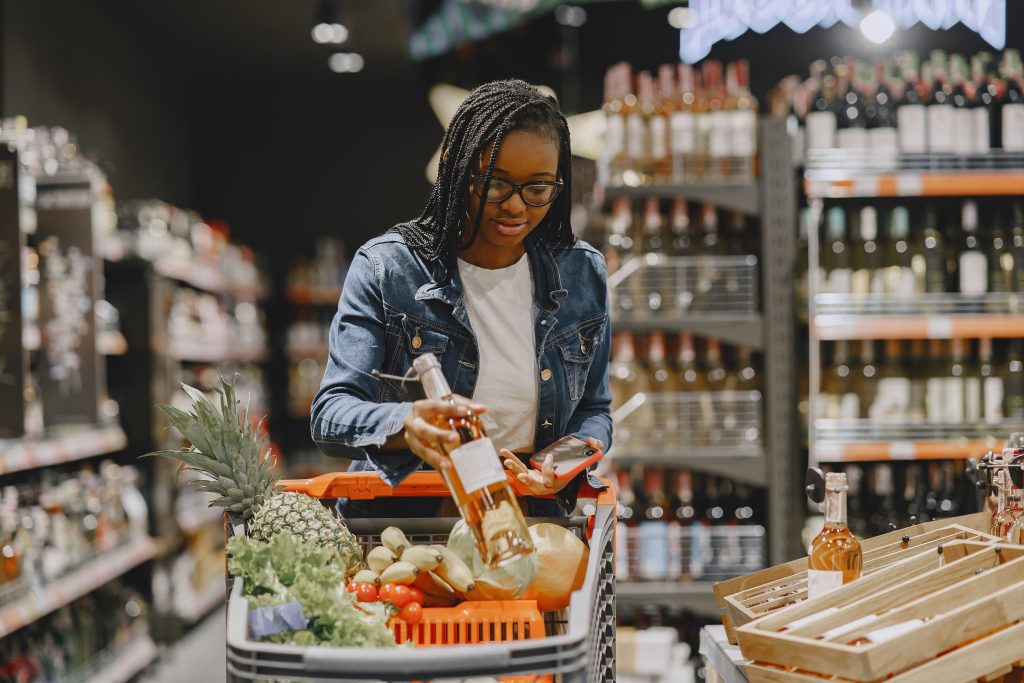
Hours later, Kemi was in a boutique in Lekki, examining the same handbag she had spotted on Instagram and weighing its price against the reassurance of buying from a trusted seller.
Kemi is not an exception; she represents the new African consumer: digitally curious, value-conscious, and trust-driven.
Across Africa, retail leaders are grappling with rapidly shifting consumer expectations, rising price sensitivity, and digital disruption, among other factors. At a virtual conference hosted by the African Retail Academy, retail experts from across the continent came together to share insights and map the trends shaping how businesses engage customers, manage operations, and thrive in 2026 and beyond. For brands and business owners, the insights that follow will be essential for navigating the evolving retail landscape
1. Pricing strategies will be overhauled as customers adjust their price preferences
Across Africa, price sensitivity is rising, even as some markets see signs of economic stabilisation. In Nigeria, businesses are already grappling with higher operating costs, and shoppers are tightening their budgets, carefully weighing each purchase before committing.
What’s particularly intriguing is who feels the pinch most. Our recent survey on price sensitivity in Nigeria revealed a surprising trend: middle-income earners are the most price-conscious segment (7.3%), ahead of high-income earners (6.9%) and low-income earners (6.2%). Low-income earners buy in small sizes that fit within their budgets, while high-income earners use proxy buyers who tend to be more price-insensitive. Middle-income buyers are the most knowledgeable about product offerings and value, which they build into their price preferences.
Segment differences further shape purchasing behaviour. B2B buyers show far higher sensitivity (46%) than B2C shoppers (21%), reflecting the reality that bulk orders and narrow margins make price changes particularly impactful for businesses.
Regional patterns are also notable. The Southeast is the most price-sensitive region (8.0%), followed by the Southwest (7.2%) and North Central (6.9%). Experts explain this dynamic: Southeast consumers are highly business-minded and deliberate about cost, Southwest buyers are aspirational and willing to pay more to maintain status, while Northern shoppers prioritise trust; once confidence in a brand is earned, purchasing follows naturally.
For retailers across Africa, the message is clear: traditional pricing approaches are no longer enough. Nuanced, insight-driven strategies that respond to regional, segmental, and behavioural differences are essential to succeed in today’s market.
2. Salespeople will drive loyalty through memorable experiences
Customer loyalty in Africa is increasingly fragile. In 2025, 6 in 10 Nigerian shoppers switched brands, with projections indicating that 8 in 10 will switch by 2030, far higher than global switch rates of 5 in 10 in 2025 and 6.5 in 10 by 2030.
One might assume price is the main reason shoppers switch, but our data tells a different story. 70% of customers who returned to a brand they had previously abandoned did so for experiential reasons: ease of access, convenience, and service or product quality, rather than price alone.
What’s most surprising from our study is who drives loyalty. Loyalty to salespeople (78%) outweighs loyalty to the brand itself (72%) across sectors. This challenges conventional thinking, which assumes that brands, rather than the individuals representing them, are the primary source of customer loyalty.
Retailers who invest in training, coaching, and supporting their sales teams to deliver consistent, memorable experiences will keep customers coming back.
3. Shoppertainment is making every scroll a potential sale in Africa
Social media in Africa has evolved far beyond entertainment. The DataReportal Nigeria Digital Report (2026) shows that 66.9% of Nigerians use social media for brand discovery, while 98.2% rely on it for product research, surpassing its use for news (57%) and work-related activities (65%).
Yet, despite massive attention on these platforms, many African retailers struggle to convert engagement into sales. Shoppertainment is changing that. By blending social content with shopping, every scroll becomes a potential sale or purchase. Viral videos, like Davido¹’s collaborations or Carter Efe² hitting 5 million views in just three hours, show how micro dramas and cultural moments can trigger instant buying decisions. Retailers can leverage short, entertaining videos, comedy skits, celebrity features, or viral micro-dramas to turn casual scrolling into immediate sales, spark impulse purchases, and strengthen brand engagement across Africa’s booming social commerce landscape.
4. Global supply pressure will force retailers to localise smarter
African retailers are increasingly turning to local sourcing as import costs rise, supply chains face disruption, and eco-friendly compliance becomes imperative. At the same time, shoppers continue to demand affordable, value-added products, putting pressure on retailers to maintain margins and growth.
Data from the Retail Trade Association of Kenya (2026) shows that supermarkets across East Africa are increasingly relying on local suppliers, expanding their private-label offerings, and adhering to packaging and food safety regulations to navigate these supply chain pressures.
While compliance can increase costs, retailers who navigate these requirements effectively are likely to build trust, strengthen supply resilience, and foster long-lasting relationships with customers and stakeholders in 2026 and beyond.
5. Responsible use of shopper data will turn consumer trust into a competitive advantage
New technologies are reshaping how African retailers collect user data. Every click, search, and transaction now offers an opportunity to personalise the customer experience. Yet consumers are paying closer attention to how their data is used. Ipsos Global Trends (9th Edition, 2025) shows that 79% of South African shoppers worry about how their data is used, above the global average of 74%.
This raises a pressing challenge: how can retailers gather data without violating privacy or ethical standards? The answer is not to slow down, but to strengthen data governance. Brands must clearly explain upfront what data will be collected, why, and how it will benefit the user.
African retailers who prioritise ethical, transparent data practices will not only earn consumer trust but can also turn it into a competitive advantage in 2026.
6. Consumer trust in retail brands will rise, fuelling private label growth
African shoppers are defying conventional retail logic. Rising prices might suggest that consumers would chase cheaper, unfamiliar options, but our data shows the contrary. 85% of South African shoppers say they are more likely to try new products from brands they already know (Ipsos Global Trends, 2025).
This creates a strategic dilemma for African retailers. If shoppers cling to familiar brands even under price pressure, how can private labels grow?
Private-label growth will depend on leveraging the credibility of established retail brands to introduce store-brand products with lower perceived risk. Retailers that align new private-label offerings with the trust they have already built will be better positioned to drive trial, strengthen margins, and expand market share in 2026
7. Market expansion will be driven by SME and informal retail inclusion
Retail in Africa remains overwhelmingly informal. Over 80% of retail activity occurs through kiosks, market stalls, and open markets (Retail Trade Association of Kenya, 2026). This presents a structural constraint for formal retail chains: if most consumer spending happens outside supermarkets and hypermarkets, traditional expansion models will struggle to deliver growth.
The shift underway is not competition with informality, but inclusion. Rather than viewing informal retailers as rivals, formal players are beginning to adapt to the realities that drive informal trade. In Kenya and across East Africa, some supermarkets are introducing smaller, more affordable pack sizes, such as 1kg soaps and detergents, to align with the purchasing patterns that typically favour informal outlets.
In 2026 and beyond, retailers that integrate SME and informal-market realities into their operating models, through pack innovation, flexible pricing, and partnership models, will be better positioned to expand reach, attract value-conscious consumers, and capture incremental market share.
8. Technology and data-driven retail will redefine operations and growth
Retail in Africa is changing fast: stores are no longer places to buy products; they’re becoming distribution hubs and real-time intelligence centres. Informal operators, once seen as tech-averse, are now adopting digital tools quickly when the benefits are clear, often outpacing larger retailers.
With supply-chain volatility and unpredictable demand squeezing margins, retailers face pressure to maintain stock, manage cash flow, and respond to customers without overextending resources. Platforms like Chari, a Moroccan-founded B2B e-commerce and fintech platform, now allow thousands of FMCG retailers to order stock digitally, manage inventory from a single mobile app, and feed real-time sales and ordering data into wider supply chains. Similarly, digital payment solutions such as PayPal, integrated with local fintech partners like Paga in Nigeria, help retailers restock faster, manage cash, and transact across borders efficiently.
With every transaction generating actionable insights, how can outlets leverage this data to improve operations, reach more customers, and stay ahead of competitors?
Retailers who embed technology and data into daily operations in 2026 will improve responsiveness, reduce stockouts, expand their reach beyond physical outlets, and reshape route-to-market strategies.
9. Embedded finance becomes core to retail growth
Cash flow constraints remain a major challenge for African retailers. Mulenga (2025) notes that in Africa, late payments and cash flow pressures slow restocking, stall growth, and trigger a ripple effect: stockouts, missed sales, and strained supplier networks that threaten overall business stability.
Embedded Finance is emerging as a solution. Tools such as retailer-focused buy-now-pay-later, automated cash-sweep systems, digital credit scoring, and integrated payment platforms are injecting real-time liquidity into the retail ecosystem.
The benefits extend beyond convenience. Faster access to cash reduces stockouts, strengthens supplier relationships, increases negotiating power, and allows retailers to respond to demand spikes in real time. Retailers that adopt embedded finance in 2026 will move faster and reach more customers than traditional cash-based operators.
Action Points for African Retailers
Adopt flexible, insight-driven pricing.
Empower sales teams to deliver memorable customer experiences.
Turn social media engagement into sales through shoppertainment.
Use technology and data to improve operations and decision-making.
Partner with local and informal retailers to expand market reach
Footnotes
Davido is a Nigerian Afrobeats artist and global music star whose songs and collaborations frequently go viral on social media.
Carter Efe is a Nigerian comedian and digital content creator known for producing viral online videos and entertainment content.
References
Ipsos. (2025). Ipsos Global Trends Survey: The Uneasy Decade (9th Edition). Ipsos Global Trends Report.
DataReportal. (2026). Digital 2026: Nigeria. DataReportal Global Digital Insights Report.
Retail Trade Association of Kenya. (2026). Retail Market and Supply Chain Insights Report. Nairobi.
Mulenga, M. (2025). Cash Flow Constraints and Financial Stability in African Retail Ecosystems. Industry commentary on retail finance and SME liquidity.
PayPal. (2025). Global Digital Payments and Cross-Border Commerce Report.
Paga. (2025). Digital Payments and Financial Inclusion in Nigeria. Company insights report.
Jackson, T. (2025). Moroccan B2B e-commerce startup Chari closes $12M Series A round. Disrupt Africa.
Authors
Uchenna Uzo
Deputy Vice-Chancellor (Academic), Pan-Atlantic University and Academic Director, Africa Retail Academy, Lagos Business School
Paschal Ike
Research and Teaching Assistant, Lagos Business School